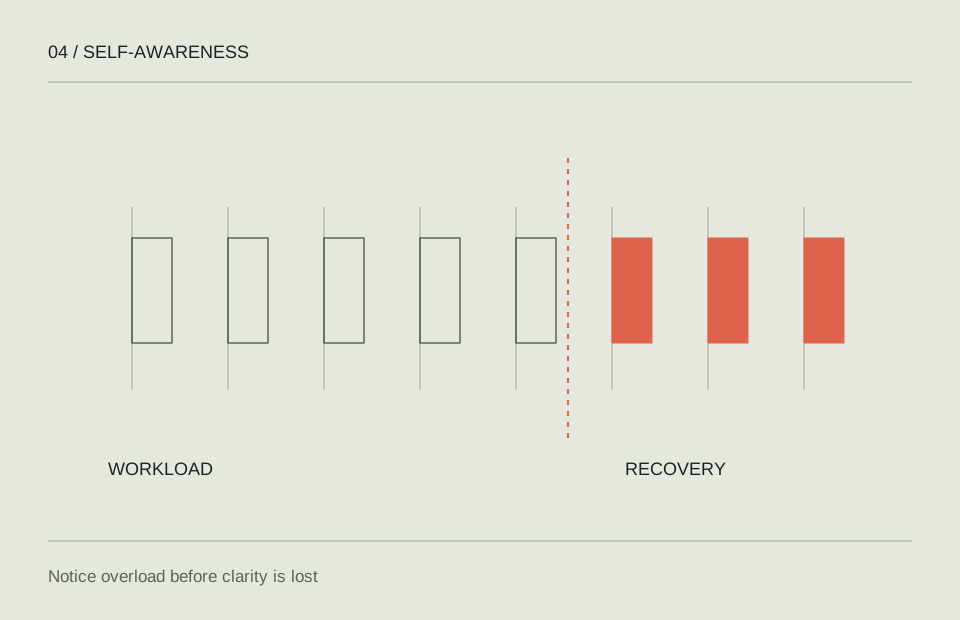
Tasks can be moving to plan while your energy drains away. It took me time to learn to notice this. Here I share what I am changing in my routine and approach to work, along with my experience of an emotional intelligence programme for leaders. This is a personal account, not a medical recommendation.

Managers are not supposed to talk about this.
Have you ever had work going to plan while feeling exhausted and anxious inside?
How do you deal with stress?
I was once an ordinary manager from a provincial town, trying to take on anything that might be useful. Over time, I realised that this approach leads to overload and loss of focus. Everything seems under control: tasks are moving, processes are automated and the team is working. But slow down just a little, and you notice that fatigue, irritation or anxiety have been building up inside for a long time.
We are used to solving problems, not discussing emotions. But if you ignore how you are feeling, one day you find that decisions are harder to make and your drive keeps fading.
Since then, I have started working on myself systematically: studying my biological rhythms, adjusting my diet, practising yoga and doing breathing exercises. Recently, I spoke about relationships in IT. Recording of the talk on YouTube The conversation with Elena Logacheva (@LogachevaEQ) went so deep that she invited me to her mastermind programme on developing emotional intelligence in leaders. The course not only confirmed things I had discovered, but also gave me new tools.
What insights have emerged so far?
🔹 Switching gears matters not only when taking a break, but within the working day too. I used to get through a ton of tasks in a day and feel completely empty by the end. Now I am learning to notice when my “battery is running down” and avoid pushing myself that far.
🔹 It has become easier for me to notice recurring emotional responses. I am learning to recognise my triggers: when you become irritated, lose motivation or start drowning the team in oversight. If you recognise them, you can manage things rather than constantly put out fires.
🔹 Focus is about your state of mind as well as your tasks. I realised that I can keep my attention on what matters without getting stuck in negativity. That turned out to be a powerful resource.
At the start of the programme, I completed the questionnaires it offered about how I was doing. I thought I was fine, but the test results surprised me…
📌 According to the interpretation of the tests I received at the time, emotional resilience was in the normal range, though mild signs of overload were noted. This describes my experience: the names of the instruments and the basis for that interpretation are not given in the article. And, of course, a high level of stress from substantial responsibility. Hello to all the straight-A students out there.
Want to take a closer look at how you feel and how you respond to workload?
I asked Elena (@LogachevaEQ) to share her own test. If this form of self-observation interests you, here is the test! (The author's test in a Telegram bot) The link leads to a third-party Telegram bot. This article does not provide data on the test's validation or how responses are processed, so I cannot promise anonymity or confidentiality. Read the service's own terms before taking part.
In the meantime, let's talk.
How would you describe your stress level?
Which factors at work have the strongest influence on it?
What is the main sign of overload you notice in yourself?