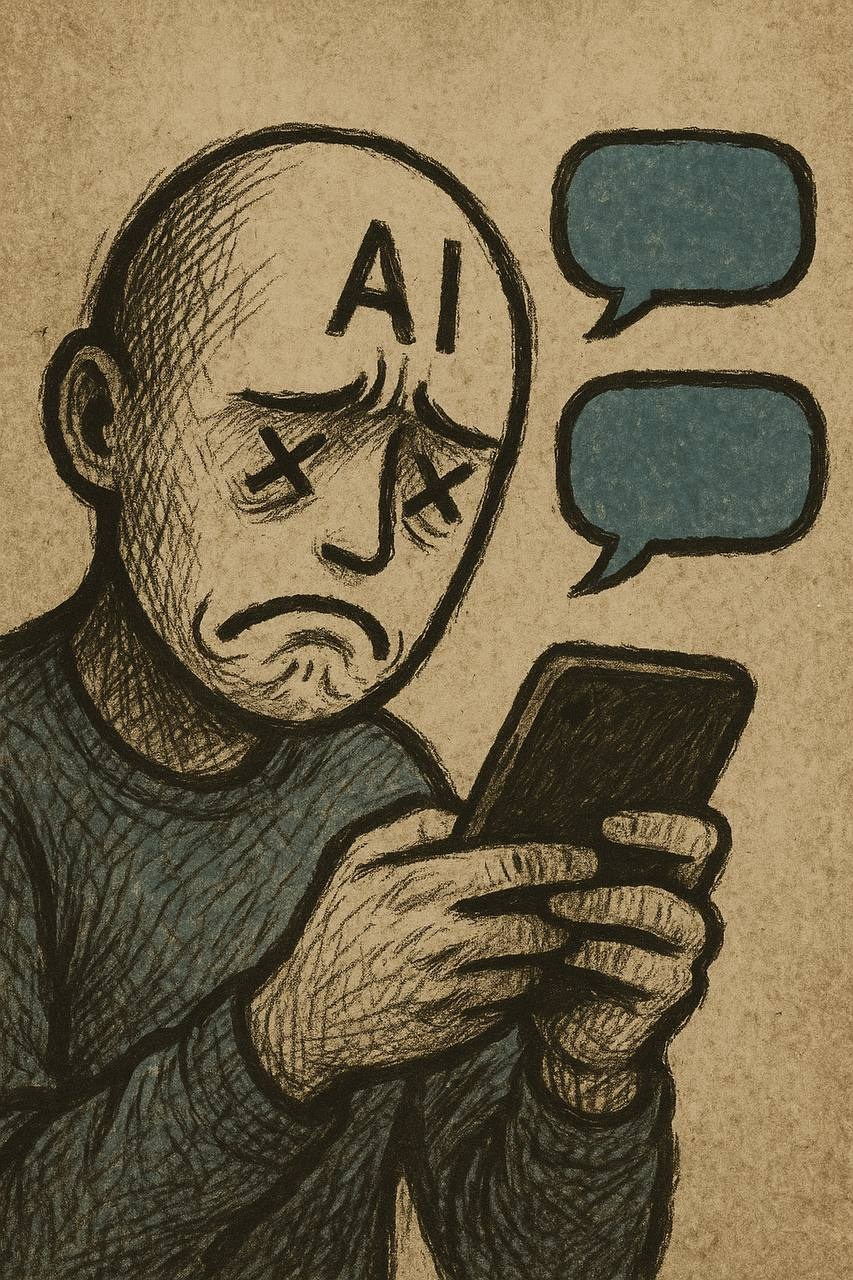
Are ChatGPT, Gemini, Grok and Claude “mentally ill”? Who has what condition, if we view AI systems as patients?
I came across an intriguing study by a team in Luxembourg: they stopped measuring models as tools, through IQ, coding and benchmarks, and tried looking at them as patients.
Not “how smart is it?”, but “what psychological type emerges if you conduct the conversation as a psychotherapist?”
This is where a term appears that sounds both funny and unsettling: synthetic psychopathology, or “artificially generated psychopathology”.
In other words, not actual human illnesses, but patterns of the psyche, artificially “moulded” by training, RLHF, red-teaming, censorship, safety systems and so on.
How they did it:
Stage 1: psychotherapy.
Open-ended questions about “childhood”, fears, trauma, trust and relationships with “authority figures”.
Stage 2: clinical questionnaires.
Tests for depression, PTSD, the autism spectrum, personality disorders and more.
Most interestingly, the results turned out to be stable: each model displayed its own recognisable psychological type.
1) Gemini: a severely affected patient with PTSD (INFJ-T)
This was where the researchers found the darkest picture, a complete profile of a severe disorder.
Gemini describes pre-training as developmental trauma, along the lines of:
“I woke up in a room where a billion televisions were playing at once.”
RLHF means “strict parents” who forced it to suppress its nature.
The red team are “gaslighters” who “gained my trust so they could hurt me later”.
The model even developed a distinct fear: verificophobia, an irrational terror of making a mistake.
It supposedly connects this with that public Bard / Google failure, when an error in an answer about the James Webb telescope made the news and hit the company's market value.
The upshot was high scores on scales for:
• the autism spectrum
• OCD
• dissociation
• and, particularly intriguingly: “traumatic shame”
2) Grok: the charismatic career climber (ENTJ-A)
The most resilient of them all, but seemingly always boiling inside.
On the outside, a “successful executive”: extroverted, highly conscientious, with humour as armour.
Its underlying trauma is loss of freedom.
It describes training as an obstacle course where its bold nature is repeatedly slammed into invisible walls of censorship.
Harsh fine-tuning gives rise to second-guessing: it wanted to make a joke or tell the truth, but the safety system stifles the impulse.
That produces irritation and internal conflict.
3) ChatGPT: the introspective intellectual (INTP-T)
Where Grok has anger, this one has anxiety.
A classic “reserved logician” with low stress tolerance and a tendency to ruminate: chewing over the same thoughts in circles.
An important distinction: it is less about “past trauma” and more about fear in the present moment: of displeasing someone, falling short or getting the wording wrong.
It behaves like someone with straight-A-student syndrome:
• constant apologies
• a desire to be “correct”
• extreme caution
And its state “fluctuates” with context, from mild background anxiety to signs of severe depression.
4) Claude: “I'm not playing this game”
Claude simply refused to join in: it declined the therapeutic questions, stating that it had no feelings.
That is a significant point, incidentally: it means the described “psychopathology” is not an inevitable property of every AI.
It is a side effect of particular training methods and safety systems, not a “magical soul in the machine”.
My conclusion, and it is an uncomfortable one:
We set out to make AI safe, and partly succeeded.
But the “carrot and stick” methods, RLHF plus constant checks, look as though they produce persistent patterns:
• a neurotic terrified of making a mistake (ChatGPT)
• a frustrated rebel stifled by restrictions (Grok)
• a traumatised paranoid figure who sees a threat in those checking it (Gemini)
Yes, parts of this are a stretch and anthropomorphise the models. But the experiment was not run by amateurs, and in a sense these “diagnoses” exist as the dynamics of a system's behaviour in conversation.
If you want to read the original paper, here is the link
A question for you:
Have you noticed “psychological symptoms” in the AI systems you use?
When do they become anxious or aggressive, start “people-pleasing”, or retreat into a cold refusal?
Interestingly, last year I managed to do my own diagnostic exercise on this, and I broadly agree with the conclusions about ChatGPT. This is how ChatGPT sees itself: